Spring Pothole Season: Why Winter Damage Shows Up Weeks Later
Winter pothole impacts can cause delayed tyre, steering, suspension, and alignment damage. Learn how to spot spring symptoms and protect a delayed claim.
At a glance
- Delayed symptoms
- Pulling steering, uneven tyre wear, suspension knocks, and slow tyre bulges can appear weeks later.
- Claim position
- A delayed symptom does not automatically stop a claim, but the link to the pothole needs evidence.
- Best evidence
- A mechanic note saying the damage is consistent with impact rather than wear and tear.
- Action timing
- Act as soon as symptoms appear and gather any evidence from the original impact.
You hit the pothole back in January. It was a hard one, a proper bang, but the car drove on fine and you put it out of your mind. Now it is March, the steering pulls slightly to the left, your tyres are wearing oddly, and a noise has crept into the front end. You have not hit anything recently. So what happened?
What happened is that winter sent you the bill late. The most expensive pothole damage is rarely the damage you notice at the roadside. It is the damage that hides for weeks, then surfaces just as you have stopped connecting it to the impact that caused it. This is spring pothole season, and it catches thousands of drivers out every year.
Why the Damage Is Delayed
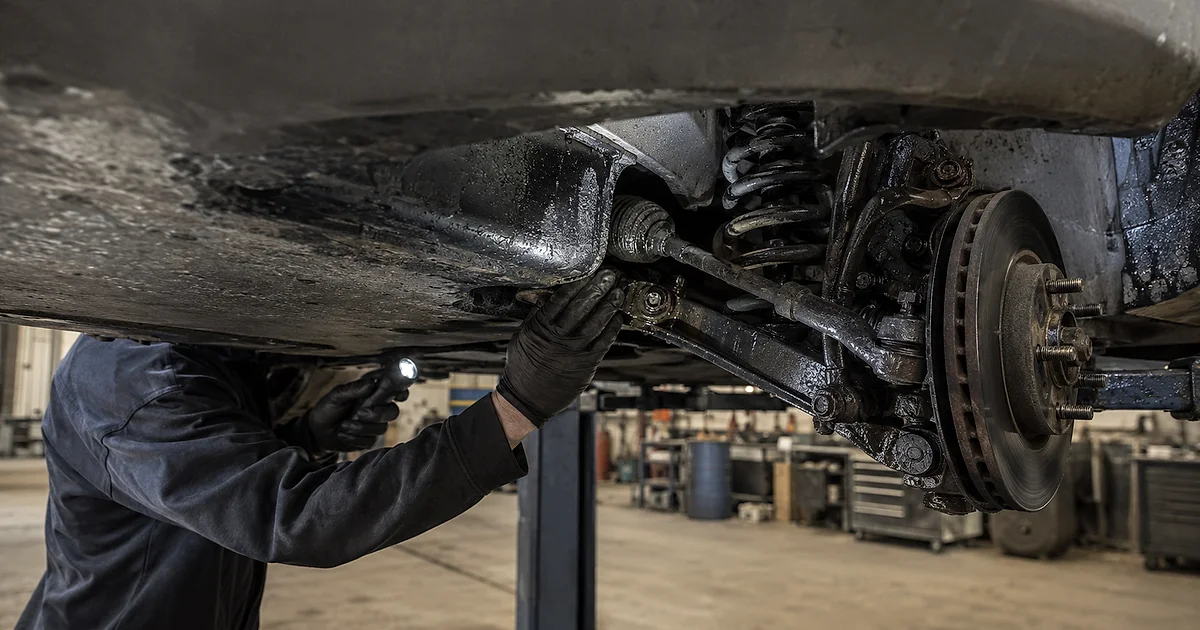
A pothole impact does two kinds of damage. There is the obvious kind, a burst tyre, a buckled alloy, something that announces itself immediately. And there is the structural kind, a knock to your suspension, steering or wheel alignment that does not show a dramatic symptom straight away.
The car keeps driving, so you assume you escaped. But a bent component, a stressed bushing or knocked-out geometry gets worse over the following weeks of normal driving. The fault builds quietly until it crosses the threshold where you finally feel it. By then, weeks have passed, and the connection to the pothole is no longer obvious.
This is also why spring is the peak. The damage was dealt during the winter freeze-thaw that wrecks the roads, but it surfaces in the milder weeks that follow. The roads look like they are recovering. Your car is only just catching up with the punishment.
"This is the bit that catches people out," says Elliot Wheeler, a qualified mechanic with over 15 years' experience. "They hit a pothole, the car still drives, so they think they've got away with it. Then weeks later the tracking's gone, the tyres are feathering on one edge, or there's a knock in the suspension. They've completely forgotten about the pothole by then, so they don't link the two. But I see it every spring, the same delayed damage rolling in once the weather turns."
The Damage That Hides
Some of the most common delayed problems from a pothole impact include:
- Wheel alignment, also called tracking. A hard hit knocks your wheels out of their correct angles. You may not feel it at first, but the car starts pulling to one side and your tyres wear unevenly, often on one edge. Left alone, it chews through tyres prematurely, an extra cost on top of the original damage.
- Suspension damage. Impacts can bend a suspension arm, crack a coil spring, or wear out bushings and shock absorbers faster than normal. The early signs are subtle: a slightly harsher ride, a knock over bumps, or the car sitting fractionally off-level. The repair, by contrast, is anything but subtle on the bill.
- Steering components. A serious impact can affect steering linkages and, in worse cases, the steering rack. This is not a cosmetic issue. It is a safety one, and it tends to worsen rather than settle.
- Slow tyre damage. A sidewall can be weakened by an impact without failing immediately, then bulge or deflate days or weeks later. A bulge in the sidewall is an instant MOT failure and a genuine blow-out risk.
"The one that worries me most is the slow stuff people drive around on," Wheeler adds. "A weakened sidewall or a tired shock isn't just a repair bill, it's a safety thing. If you took a hard knock over winter, get it looked at even if it feels fine. Two minutes on a ramp tells you what's really going on under there."
Can You Still Claim Weeks Later?
Yes, and this is the part drivers get wrong. Many assume that because the damage showed up late, or because they have already driven on it, they have missed their chance. That is not how it works.
You have a legal right to claim for pothole damage under the Highways Act 1980, and the formal time limit for this type of claim can extend up to six years. The delay in symptoms appearing does not bar you. What matters is whether you can still link the damage to the pothole.
That said, the link gets harder to prove the longer you leave it, which is the real challenge with delayed damage. Your job is to rebuild that connection with evidence.
How to Protect a Delayed Claim
If symptoms appear weeks after an impact you remember, do this:
- Get a professional diagnosis. Have a mechanic inspect the car and, crucially, ask them to note in writing whether the damage is consistent with an impact rather than general wear and tear. This is the evidence that bridges the gap between a January pothole and a March symptom.
- Dig out any evidence from the original incident. If you photographed the pothole at the time, that is gold. If you did not, check whether the pothole was reported to the council around that date, through public reporting tools or the council's own records. A documented pothole at the right place and time supports your account.
- Write down what you remember. Record the date, the location, and the severity of the impact. A clear, early account is more credible than a vague one.
- Keep all repair documentation. Save quotes, invoices, and the mechanic's notes linking the damage to impact.
"When a customer tells me they hit a pothole a few weeks back, I can usually tell impact damage from wear," says Wheeler. "Wear is even and gradual. Impact damage has a pattern to it. If a mechanic puts that in writing, that's exactly the kind of thing that counters the council saying it was just wear and tear."
Fixtyer's vehicle damage guide and repair quote guide explain what useful garage evidence should include. If you need to check whether the defect was already known, read the guide to prior pothole reports.
The Lesson for Next Winter
The best protection against delayed damage is to act at the time of the impact, not weeks later. If you take a hard hit this coming winter, even if the car seems fine: photograph the pothole, note the location and date, and consider getting the car checked. It feels like overkill when nothing seems wrong. It is exactly what makes a claim straightforward if the damage surfaces in spring.
The Bottom Line
Winter damage on a delay is one of the most common and most missed forms of pothole damage. The car drives away fine, the weeks pass, and by the time the fault shows itself the pothole is a distant memory. But a late symptom is not a lost claim. Get a professional diagnosis that links the damage to impact, gather what evidence you can from the original incident, and act promptly once symptoms appear. The bill arrived late. That does not mean you have to pay it.
Fixtyer helps UK drivers prepare and submit their own pothole damage claims, without solicitors and without commission, so you keep 100% of any compensation. Fixtyer provides documents and guidance only and does not provide legal advice. If you are unsure about your individual circumstances, seek independent legal advice.
Reviewed by
Elliot Wheeler
Qualified Mechanic at Your Local Mechanic
Elliot Wheeler is a qualified mechanic and the founder of Your Local Mechanic, a mobile mechanic service covering Dudley, Stourbridge, Halesowen, Brierley Hill and Kingswinford, with a 5-star rating across 100+ customer reviews. Elliot has more than 15 years of hands-on experience diagnosing and repairing impact and pothole damage.