Summer Road Trips and Pothole Damage: What to Check Before You Drive Away
Before a summer road trip, check for pothole damage that can become dangerous under heat, load, and motorway speeds. Use this tyre, suspension, and evidence checklist.
At a glance
- Main risk
- Minor pothole damage can fail under heat, luggage weight, passengers, and motorway speeds.
- Fastest check
- Look at tyre sidewalls, laden pressures, steering pull, suspension knocks, underside damage, and spare kit.
- If you find damage
- Photograph it before repair and ask the mechanic to note whether it is consistent with impact.
- Best timing
- Check before you leave, not after the long drive exposes the weakness.
Summer is when the car gets loaded up and pointed at the coast, the campsite or the motorway for a few hundred miles. It is also when minor, ignored pothole damage picks its moment to become a roadside emergency. A worn shock or a weakened tyre that coped fine with the school run behaves very differently fully loaded, at speed, on a long drive in the heat.
The good news is that a ten-minute check before you set off catches most of it. Here is what to look at, why it matters for a long trip, and what to do if you find damage that traces back to a pothole.
Why Summer Exposes Pothole Damage
A car carrying four people and a boot full of luggage is under far more strain than the same car on a short local trip. Add motorway speeds, longer distances and high summer temperatures, and any existing weakness gets tested hard.
Two things make pothole damage especially likely to surface now. First, the roads took their beating over winter and early spring, so by summer there is a backlog of cars carrying damage their owners never dealt with. Second, the failures that pothole damage causes, tyre blowouts, suspension giving way, alignment problems, are exactly the failures that a hot, heavy, high-speed drive brings to a head. The pre-trip check exists to find them in your driveway rather than on the hard shoulder.
Your Pre-Trip Pothole Check
You do not need tools or expertise for most of this. You need ten minutes and a bit of attention.
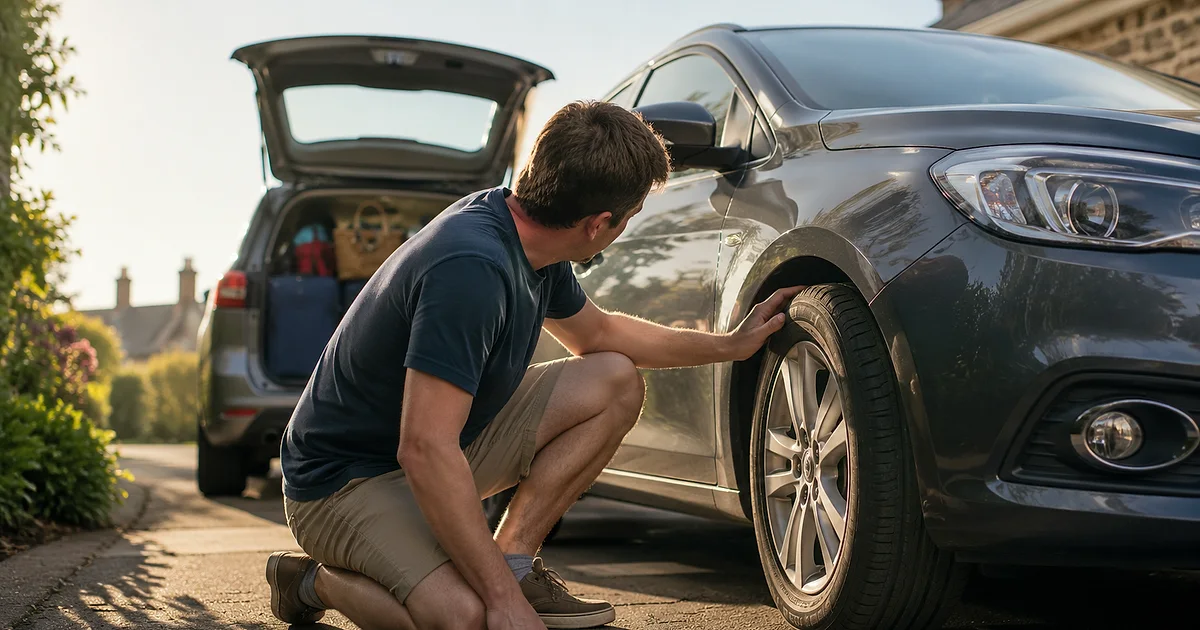
- Tyres, including the sidewalls. Check tread depth and pressure, but do not stop at the tread. Run your eye around the sidewall of each tyre, the part facing outward, looking for bulges, blisters or cracks. A bulge is a weak spot that can fail under the heat and load of a long drive. This is the damage pothole impacts most often leave behind, and the part drivers most often miss.
- Pressures for a loaded car. A fully loaded car usually needs higher tyre pressures than a near-empty one. Check your handbook or the sticker in the door frame for the laden figure, and set them before you go. Correct pressures matter even more if a tyre is already carrying minor damage.
- The way the car sits and steers. On a slow test drive around the block, notice whether the car pulls to one side, whether the steering wheel sits straight when you are going straight ahead, and whether there are any knocks or clunks over bumps. All three can be signs of pothole damage to alignment or suspension, and all three get worse, not better, over a long drive.
- A look underneath. A quick glance under the front of the car, especially on lower vehicles, can reveal a hanging undertray, fresh scrapes or signs of an impact you had forgotten about.
- The spare and the kit. Make sure you actually have a usable spare or a working tyre repair kit, and that you know where it is. If pothole damage does strike on the road, this is the difference between a delay and a ruined day.
A Mechanic's Pre-Trip Tip
The one check drivers most often skip is the one a mechanic would do first.
"Before any long drive, walk around the car and properly look at the sidewalls, not just the tread," says Elliot Wheeler, a qualified mechanic with over 15 years' experience. "A pothole bruise on the sidewall might have sat there for weeks doing nothing on short trips. Load the car up, get it hot on a motorway for three hours, and that's exactly when it lets go. Two minutes looking before you leave can save you a blowout at seventy."
For more on why sidewall, steering, and suspension damage is so easy to miss, read The Mechanic's View.
What to Do if You Find Pothole Damage
If your pre-trip check turns up damage, and you can reasonably trace it to a pothole you remember hitting, do not just fix it and forget it. That damage may be claimable.
Before any repair:
- Photograph the damage clearly, from more than one angle.
- Note what you remember about the pothole: roughly when and where you hit it, and how hard.
- Ask the mechanic doing the repair to note in writing whether the damage is consistent with an impact rather than ordinary wear.
You have a legal right to claim for pothole damage under the Highways Act 1980, and the fact that you spotted it during a pre-trip check rather than at the moment of impact does not remove that right. What matters is linking the damage to the pothole, which is why the photos and the mechanic's note are worth gathering before the evidence disappears under a repair.
Fixtyer's guides to documenting vehicle damage and getting the right repair quote explain how to turn a repair into claim-ready evidence.
Do Not Let a Small Job Become a Big One
There is a practical reason to deal with pothole damage before a trip rather than after, beyond the claim. A weakened tyre or a tired shock that fails at home is an inconvenience. The same failure at speed, fully loaded, with passengers aboard, is a genuine hazard. If your check finds something that looks marginal, the safe call is to get it sorted before you go, not to gamble on it lasting the journey.
The Bottom Line
Summer road trips put cars under exactly the kind of strain that exposes hidden pothole damage. A ten-minute check before you set off, tyres and sidewalls, pressures for a loaded car, steering and suspension feel, a glance underneath, finds the problems while you can still do something about them. And if that check turns up damage from a pothole you remember, photograph it and get it noted before you repair it, because a check that protects your trip can protect your right to claim the cost back too.
Fixtyer helps UK drivers prepare and submit their own pothole damage claims, without solicitors and without commission, so you keep 100% of any compensation. Fixtyer provides documents and guidance only and does not provide legal advice. If you are unsure about your individual circumstances, seek independent legal advice.